
1920 · THE WORD
It began as a play
Karel Čapek’s R.U.R. (Rossum’s Universal Robots) gave the world the word for artificial workers.
How it got its name
FROM STAGE TO FACTORY FLOOR
SENSE plan · act
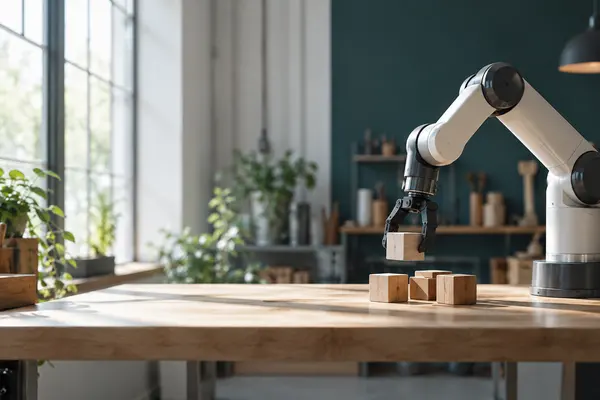
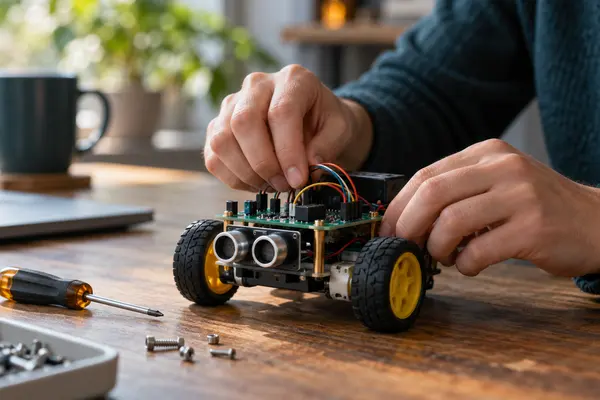
AI-generated image, not a photograph of a real person or place.
The word robot is barely a century old.
It first appeared in a Czech play about artificial workers. Forty years later a real robot arm went to work in a car factory. Today about five million industrial robots are in use. Here is the story, the numbers and how robots actually work, in plain English.
Plain English, with the sources linked.
THE SHORT STORY
Robots started as fiction,
became factory tools, and now work far beyond them.
1920 · THE WORD
Karel Čapek’s R.U.R. (Rossum’s Universal Robots) gave the world the word for artificial workers.
How it got its name1961 · THE FIRST ARM
The first Unimate arm lifted hot metal parts in a car plant. About five million robots now work in factories.
See the numbersTODAY · THE LOOP
Every robot senses its surroundings, plans a response and acts through motors, then does it again.
Read robot headlines better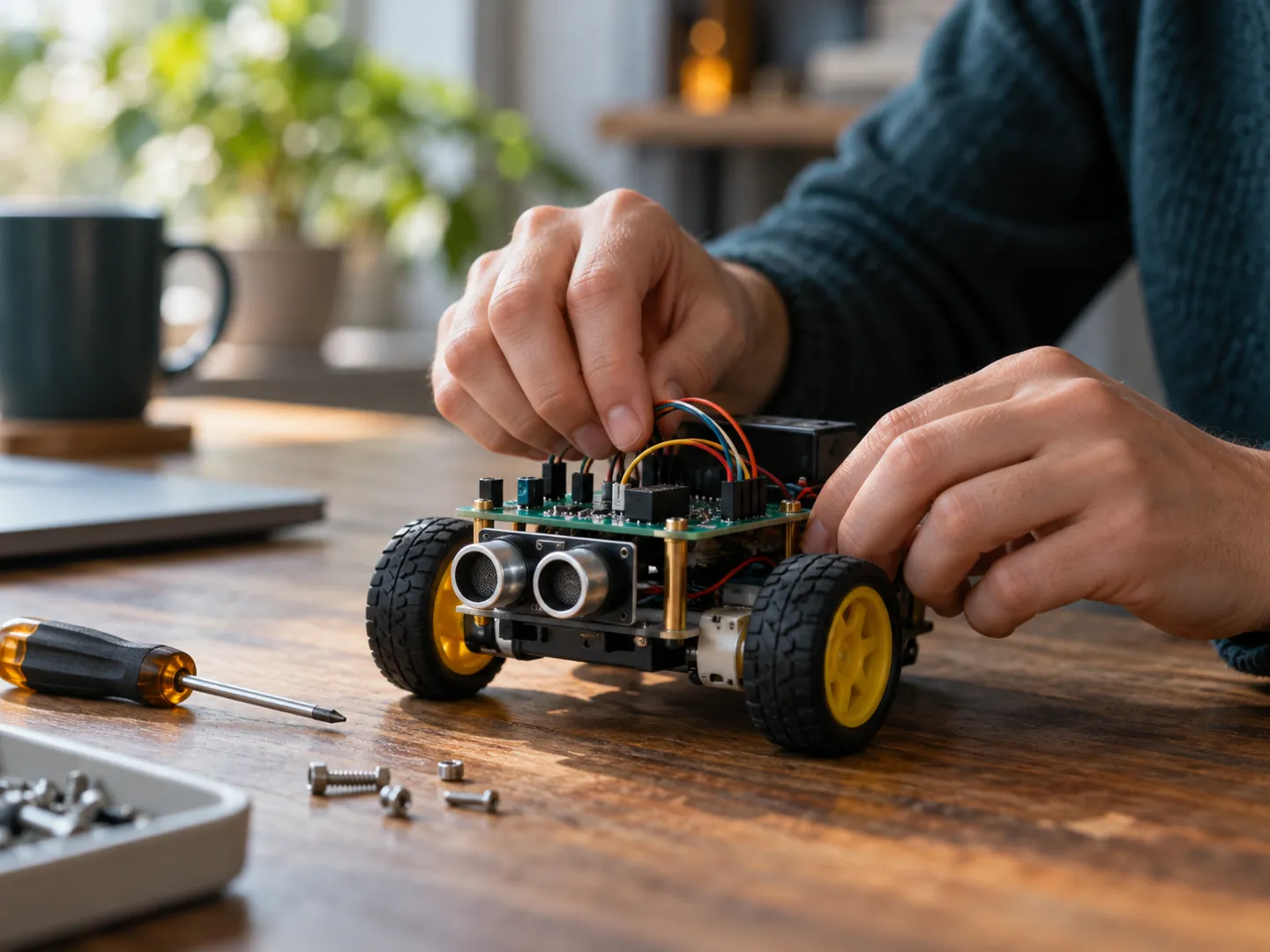
READING ROBOT NEWS
Every robot needs sensors, such as cameras, distance or colour sensors, to gather data about its surroundings. If a story never says, ask.
The plan usually comes from software loaded in advance. Some impressive demonstrations are still steered by a person at a distance.
“Five million robots” is the number in use; “600,000” is one year’s installations. They measure different things.
Robot density is per 10,000 manufacturing employees, not per head of population, so a small country can top the table.
ROBOTS IN 2025
Two different counts from the
International Federation of Robotics.
5 million
Operating in factories worldwide
The global stock of working industrial robots rose 9% in 2025, after factories installed more than 600,000 new ones. China alone installed 354,000, or 59% of the world total.
INDUSTRIAL ROBOTS · IN USE
almost 250,000
Professional service robots shipped
Shipments rose 24%. Transport and logistics robots led with 117,500 units, 47% of the market, ahead of hospitality and professional cleaning robots.
SERVICE ROBOTS · SOLD IN 2025
One figure is a running total of robots in use; the other is a single year’s sales. Headlines often mix the two up.
ROBOT DENSITY EXPLORER
Robot density compares the number of industrial robots in use with the number of people employed in manufacturing. Pick a country to see its 2024 figure from the International Federation of Robotics.
Density measures automation relative to the size of the workforce, not the total number of robots. China has by far the most robots but ranks 22nd for density.

ROBOT FACTS
R.U.R. was published in November 1920. Its first performance was by an amateur company in Hradec Králové on 2 January 1921; the National Theatre in Prague staged it on 25 January 1921.
Karel Čapek first thought of calling his artificial workers “labors”. His brother Josef, a painter, suggested “robots”, from a Slavic root meaning labour with a strong sense of serfdom.
George Devol filed his patent for a programmable arm in 1954. In 1961 the first Unimate was installed at a General Motors plant to lift and stack hot die-cast parts.
Five million industrial robots in use is more than double the number seven years earlier. The IFR forecasts 655,000 new installations in 2026.
About 7,000 full-size humanoid robots were sold worldwide in 2025. The IFR notes most uses are specialised and often still need a human operating them remotely.
QUICK QUESTIONS
Short answers to the questions people ask most.
From the Czech play R.U.R. (Rossum’s Universal Robots) by Karel Čapek, published in November 1920 and staged in Prague in January 1921. His brother Josef suggested the name. It comes from a Slavic root meaning labour, with a strong sense of forced work.
The Unimate. George Devol filed a patent for a programmable robot arm in 1954, and in 1961 the first Unimate was installed at a General Motors plant, where it lifted and stacked hot die-cast metal parts. The original is in the Smithsonian collections.
According to the International Federation of Robotics, about 5 million industrial robots were in operation worldwide in 2025, up 9% in a year. Factories installed more than 600,000 new ones in 2025, and China accounted for 59% of them.
The Republic of Korea, with 1,220 industrial robots per 10,000 manufacturing employees in 2024, followed by Singapore (818), Germany (449) and Japan (446). The world average was 132.
A simple way to describe it is sense, plan, act. Sensors gather data about the surroundings, software works out a course of action from that data, and actuators such as motors carry it out. Then the loop starts again.
Each figure on this page comes from the sources below.
A NAME WITH CHARACTER
doodlerobot.com is part of the DoodleSale portfolio. It isn't in an auction right now, but you can ask about leasing it.